Pamukkale weather in short
Summers are hot and dry, winters are cool with the most rain, and spring and autumn sit in between. The figures below come from the Turkish state meteorological service for the Denizli station and cover the measurement period 1957 to 2025. They are long-term monthly averages. They are not a forecast for your trip, and they do not describe the exact conditions on the terraces.
Maximum and minimum are the average daily high and low of each month. Rainfall is the average monthly total. Individual days can be far hotter, colder or wetter than the average, so treat the table as a guide to the season, not to a given day.
Month by month
Denizli climate averages, 1957 to 2025.
| Month | Average high | Average low | Rainfall |
|---|---|---|---|
| January | 10.7 °C | 2.5 °C | 89.8 mm |
| February | 12.4 °C | 3.1 °C | 68.9 mm |
| March | 16.1 °C | 5.5 °C | 62.6 mm |
| April | 21.1 °C | 9.3 °C | 51.6 mm |
| May | 26.5 °C | 13.4 °C | 44.2 mm |
| June | 31.5 °C | 17.6 °C | 28.8 mm |
| July | 34.8 °C | 20.5 °C | 14.7 mm |
| August | 34.7 °C | 20.1 °C | 11.2 mm |
| September | 30.3 °C | 16.1 °C | 15.9 mm |
| October | 24.0 °C | 11.6 °C | 34.9 mm |
| November | 17.6 °C | 7.3 °C | 54.7 mm |
| December | 12.4 °C | 4.3 °C | 89.0 mm |
Source: Turkish State Meteorological Service, Denizli station. Rainfall is the mean monthly total in millimeters.
Pamukkale tours and day trips
Guided visits to the terraces and Hierapolis, balloon flights and combined day trips, with live prices and availability.
The best time to visit
A reading of the averages, not a promise of dry weather or quiet sights.
April, May and October
These months are less hot than midsummer. April averages 21.1 °C by day and May 26.5 °C, and October 24.0 °C. Spring brings more rain than July and August, with 51.6 mm in April and 44.2 mm in May, against 14.7 mm in July. October has 34.9 mm on average. For walking the terraces and the ruins, these are the comfortable months.
June to September
Days are hot, with averages from 30.3 °C in September to 34.8 °C in July, and very little rain. Walking on exposed stone is hardest in the middle of the day. Plan the terraces and Hierapolis for early morning or late afternoon, take water and sun protection and expect high temperatures.
November to March
Days are cool, from 10.7 °C in January up to 17.6 °C in November, nights fall to between 2.5 and 7.3 °C and these months are the wettest, with 89.8 mm in January and 89.0 mm in December. Dress in layers. Surfaces can be slippery, and you will be barefoot on the open travertines.
What the weather changes
Five plans that depend on the forecast.
Balloon flights
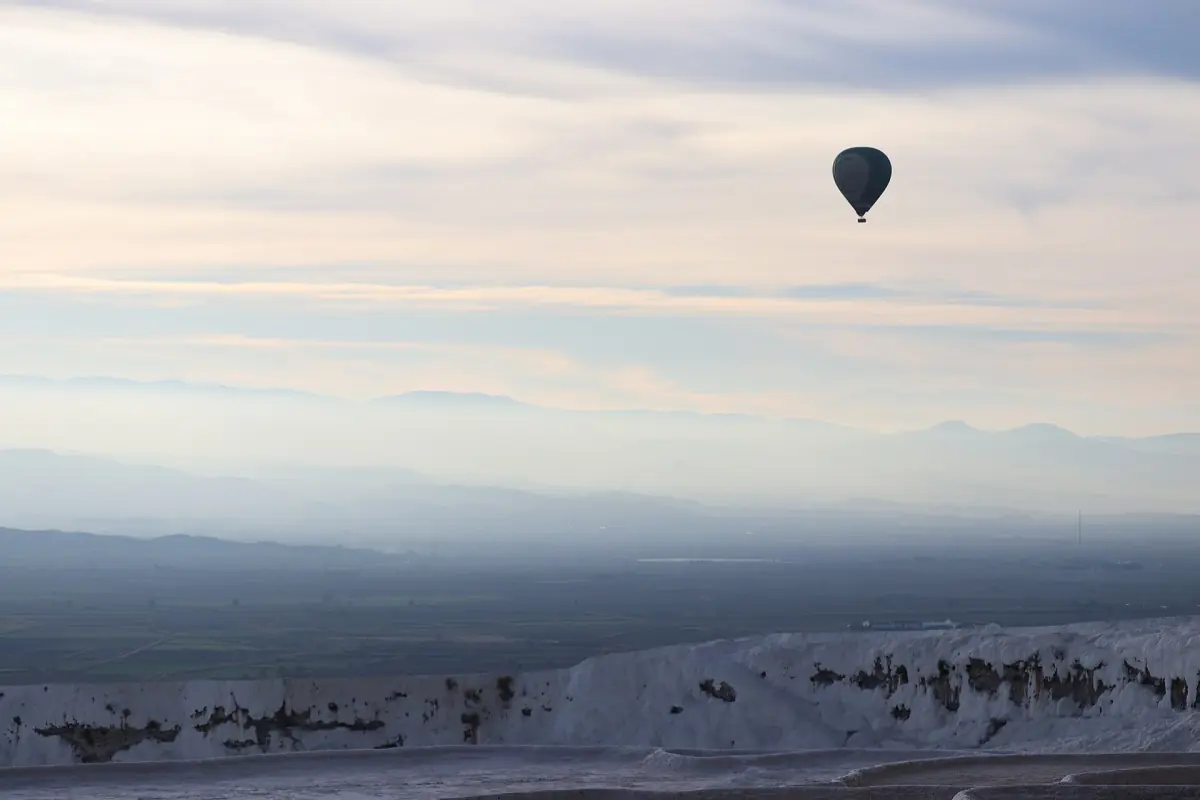
Flights depend on the weather, including wind. Operators cancel when it is unsuitable. One operator offers a full refund for a weather cancellation, and terms differ between operators, so check them. The table cannot tell you how many flights fly in a given month.
Balloon flights →The terraces
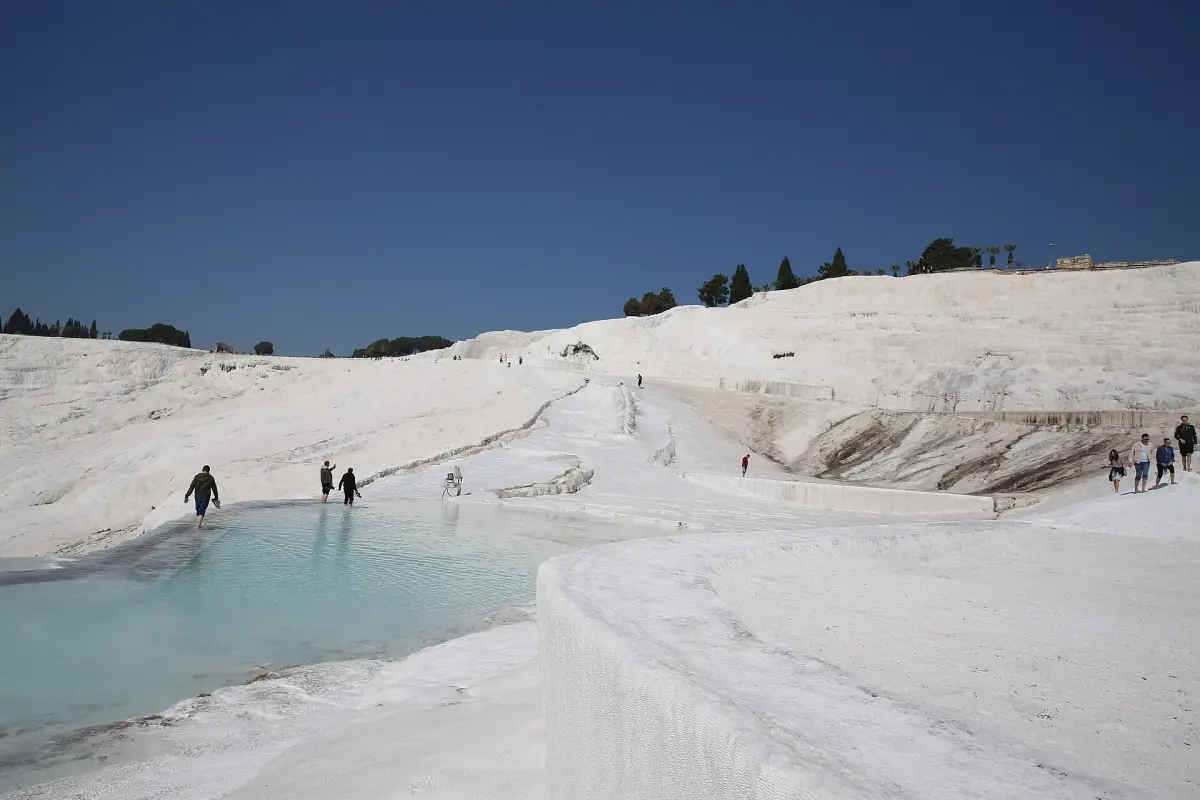
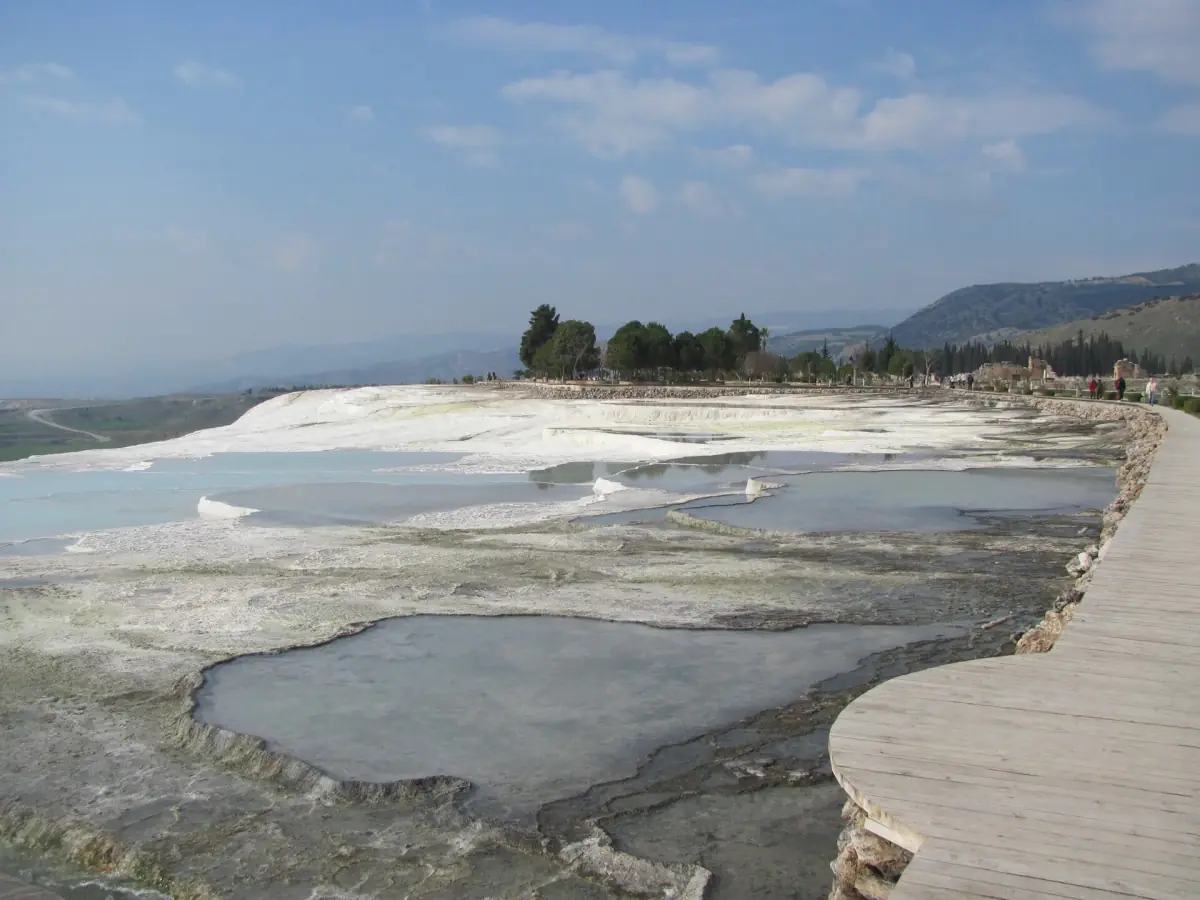
The shape of the day depends on the heat. The site page shows 8 a.m. to 6 p.m. in October 2026, and a state museum profile lists a summer scheme from 1 May to 1 October with opening at 6:30 a.m. and closing at 9 p.m. Check which scheme applies before you go. The thermal water in the terrace pools is managed centrally, so do not count on full turquoise basins every day.
Pamukkale guide →The Antique Pool
Reports give the water about 36 °C all year, so it works in any season. A September 2026 visit report lists 8 a.m. to 6:30 p.m. Check the winter hours before you go.
Antique Pool →What to pack
In summer, pack a hat, sun protection and a water bottle. In winter, pack layers and a waterproof jacket. The open travertines are walked barefoot in every season, and the stone and the water on it can be slippery, so take your time and carry your shoes in a bag.
Day trips
Long excursions to Aphrodisias or Salda Lake are more comfortable in the cooler months, when you spend hours outdoors on open ground. The Salda page covers the rules at the lake.
Salda Lake →Plan the rest of your trip
Pages that follow from the season.
Pamukkale weather: frequently asked questions
What is the best month to visit Pamukkale?
April, May and October are less hot than midsummer, based on the averages. There is no month that guarantees dry weather or empty sights, so pick by your own tolerance for heat or rain.
How hot does Pamukkale get in summer?
Daytime highs average about 35 °C in July and August. The highest August temperature in the measurement period was 44.4 °C. Do not mix up the average and the record.
Does it rain in Pamukkale?
Yes, mostly from November to April. January and December are the wettest months with about 89 mm each. July and August get 14.7 and 11.2 mm.
Can I visit in winter?
Yes. Days are cool, from 10.7 °C in January, and nights fall to 2.5 °C. The Antique Pool is reported at about 36 °C all year, but check the current opening hours.
Are these figures a forecast?
No. They are long-term averages for the Denizli station from 1957 to 2025. Look at a current forecast shortly before you travel.