Pamukkale in brief
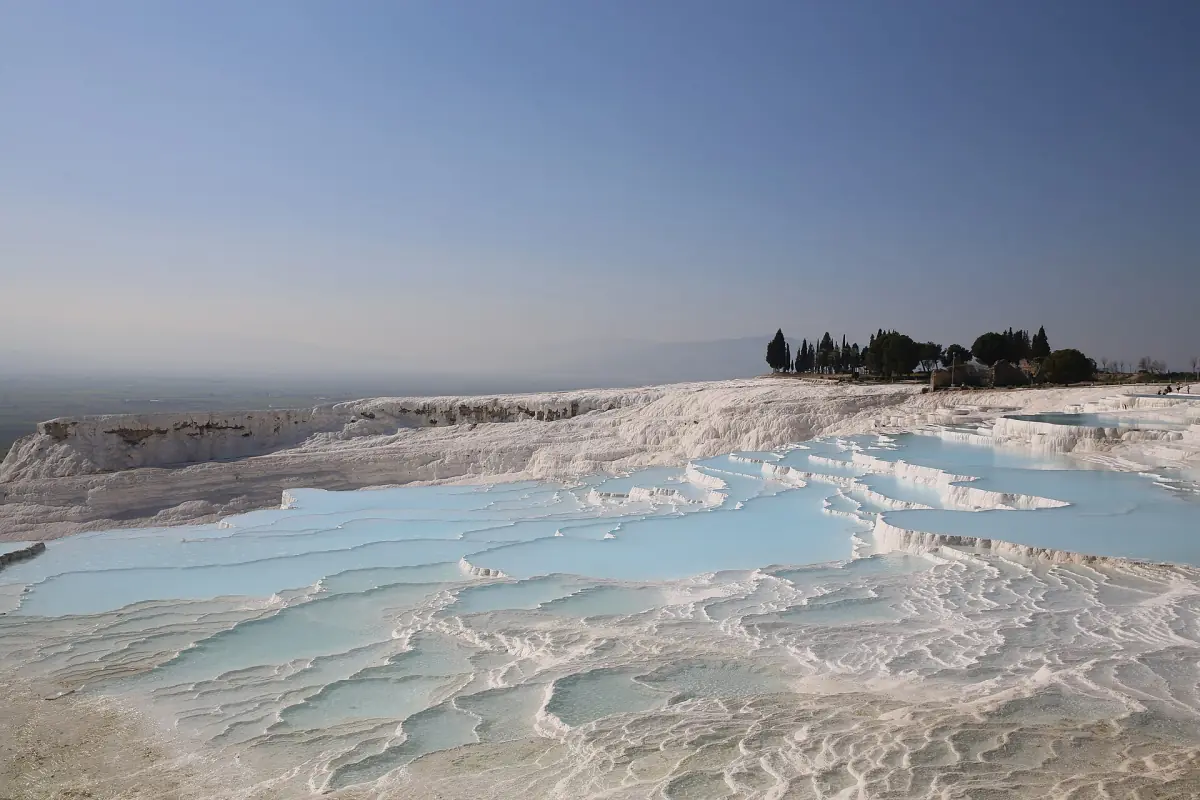
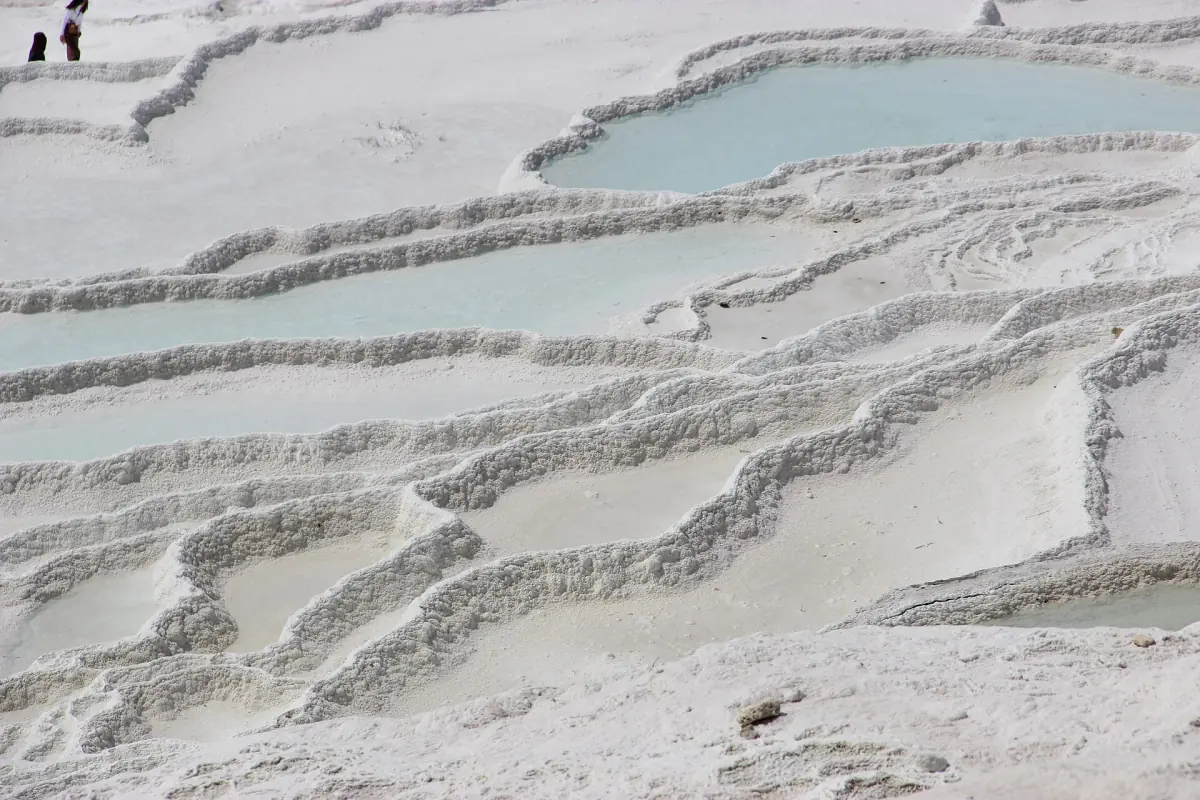
The Pamukkale travertines are terraces of white limestone that formed where warm, mineral-rich water ran down a hillside and left lime behind. UNESCO lists Hierapolis-Pamukkale as a mixed site, for nature and culture, and has done so since 1988. The ancient city of Hierapolis stands above the terraces, so one visit usually covers both. The site lies about 18 km north of Denizli.
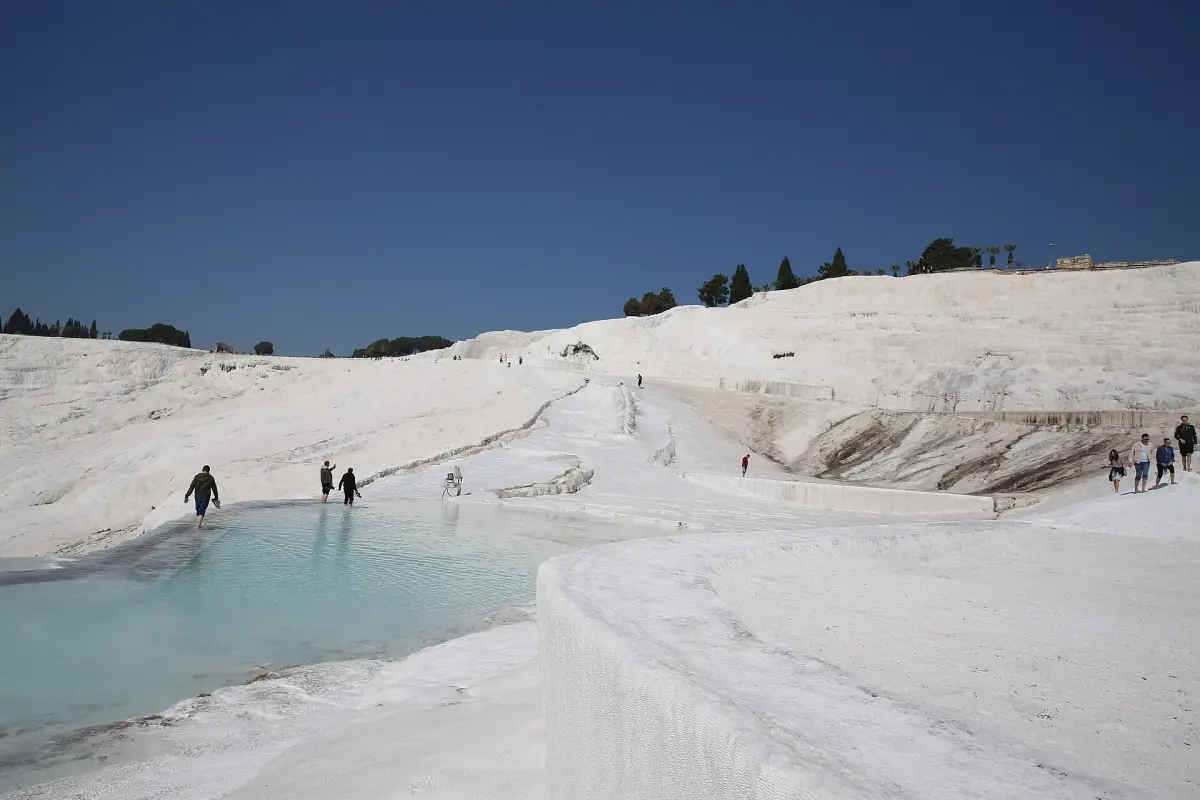
The natural terraces are protected, and UNESCO describes some of them as closed to visitors, with designated areas for walking and bathing. You walk on the opened travertine route, not across the whole slope. Private vehicles are not allowed inside the site, except in an emergency. You can still drive to the car parks outside.
Tickets and entrances
Prices and hours as listed in October 2026. They are adjusted from time to time.
Entry price
The central tariff list shows €30 for foreign visitors. The same ticket area includes Hierapolis. The MüzeKart is shown as valid for Turkish citizens on the museum administration's page, so do not count on it as a pass for foreign visitors. No fixed Turkish lira equivalent is listed.
Hierapolis guide →Children
One state listing shows foreign children aged 0 to 8 as free, and also lists visitors aged 8 and over at €30. The listing is inconsistent for an 8-year-old, so confirm the age rule at the ticket office. Turkish children and teenagers up to 18 and Turkish seniors over 65 are listed as free.
Tours with a guide →The south and north gates
Both gates close at 18:00 in the schedule shown in October 2026. Which one is closer depends on where you park or where your bus stops, so ask your driver or hotel.
Getting there →The village access
From the village of Pamukkale, the way in starts at the bottom of the travertine route, so you walk uphill over the opened terraces. Staying in the village does not replace a ticket.
Where to stay →Our picks: visiting Pamukkale
A ticket, a guided walk and a highlights tour with lunch.
Hand-picked tours, booked through GetYourGuide. Prices are indicative starting prices in euros (as of October 2026). Tap a tour for live availability and the current price in your currency.
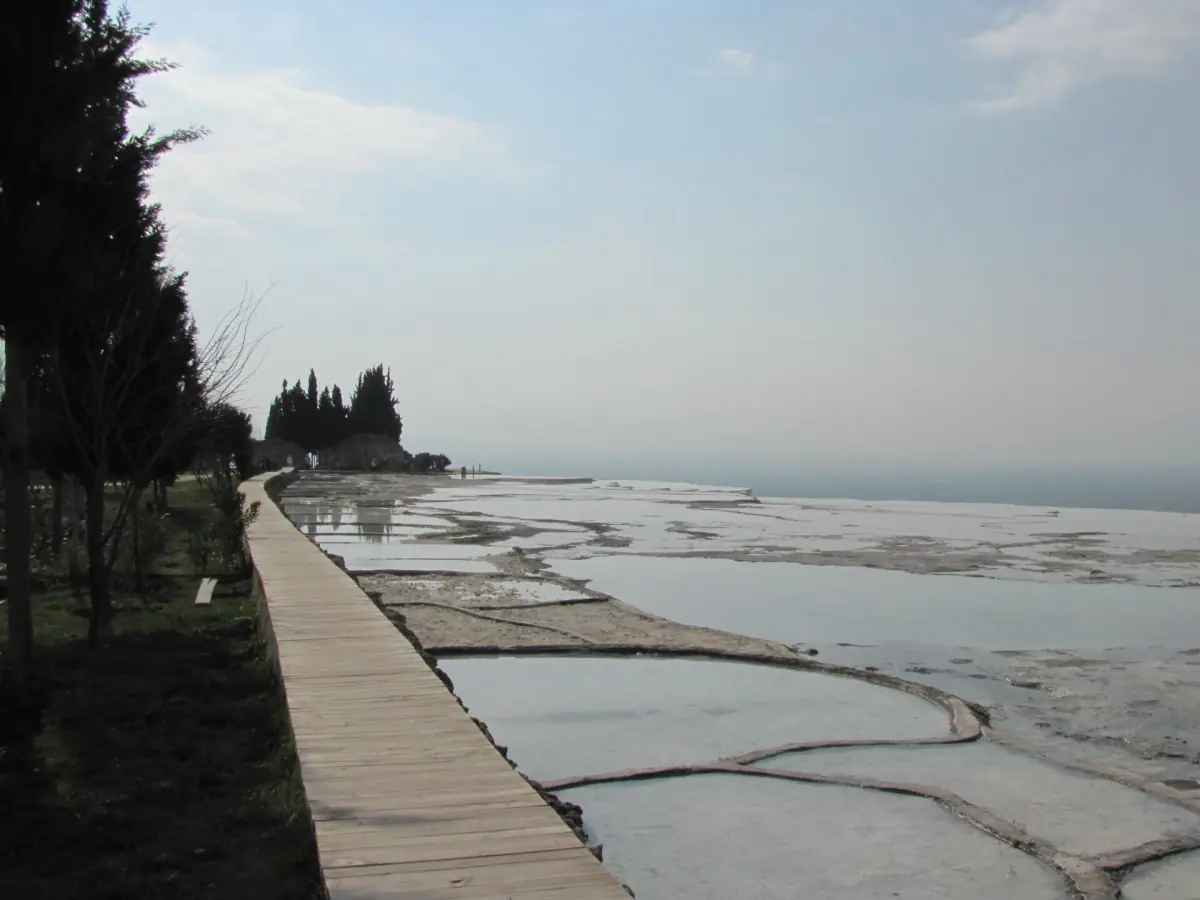
Guided walking tour of Pamukkale and Hierapolis
A professional guide for a walk through the site. Entry fees are not included.
Check availability →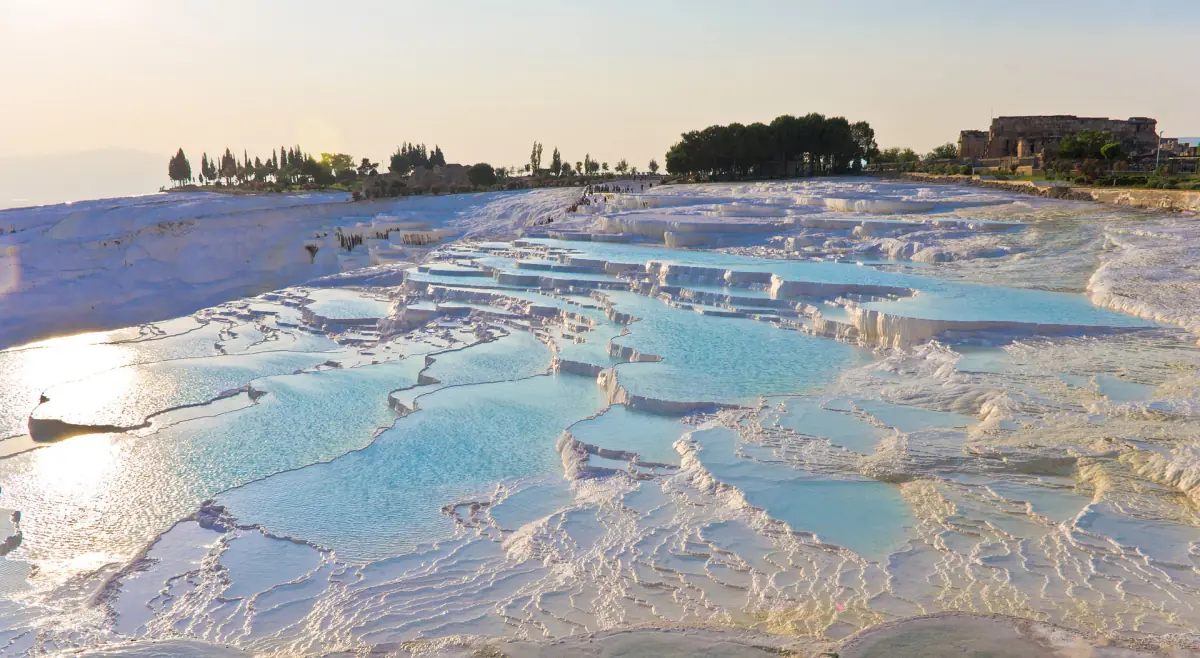
Pamukkale highlights tour with lunch
Hotel transfer, lunch buffet, air-conditioned bus, guide and insurance. Entry fees are not included.
Check availability →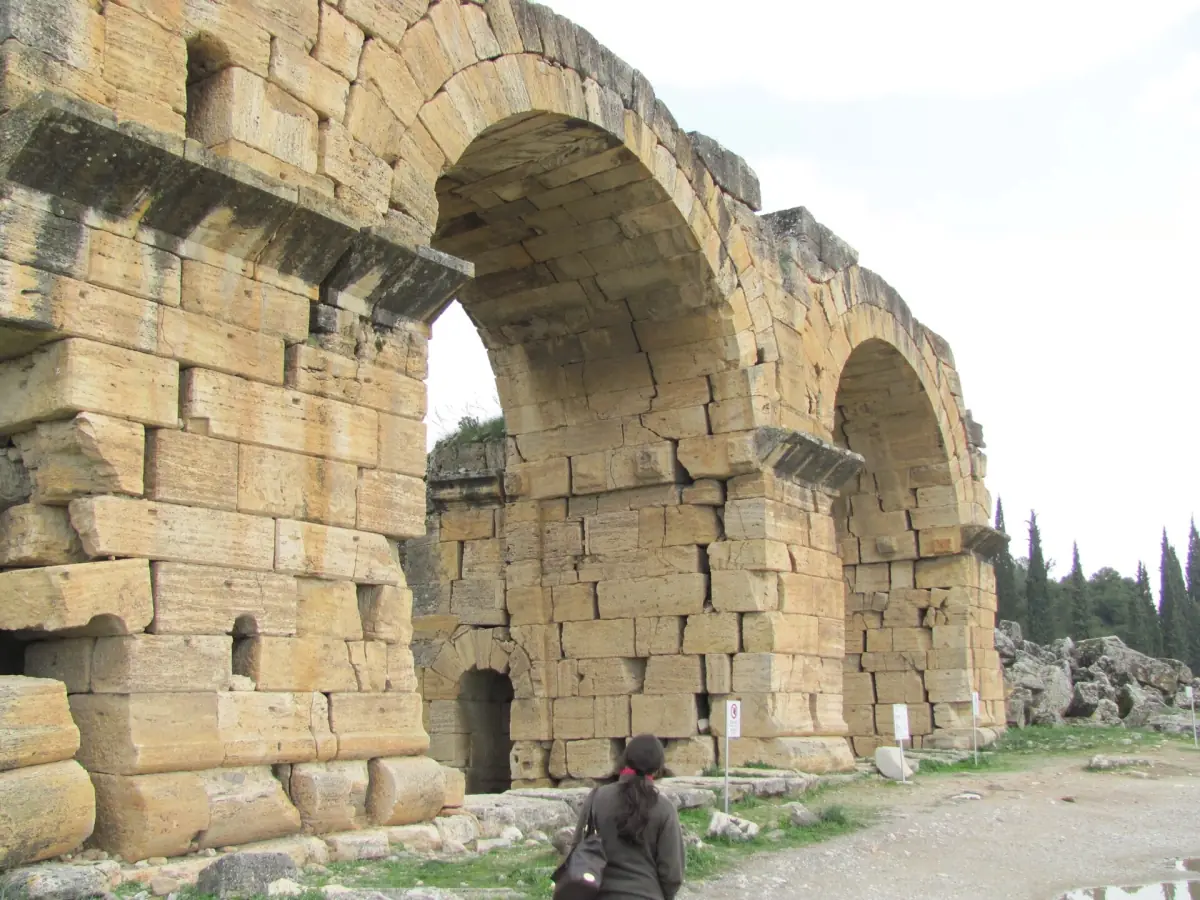
Pamukkale and Hierapolis skip-the-line ticket
The ticket covers the ancient city, museum, theatre, Roman bath, Plutonium and Martyrium. The audio guide only comes with that option; the Antique Pool is not confirmed.
Check availability →Pamukkale tours and day trips
Guided visits, day trips and combinations around Pamukkale, with live prices and availability.
Opening hours
The state museum pages do not agree on one schedule, so read the table as a guide, not a promise.
| Source and period | Hours | Cash desk |
|---|---|---|
| Museum website, shown October 2026 | 08:00 to 18:00 daily; south and north gates close at 18:00, the pedestrian entrance at 17:00 | Until 17:00 |
| State museum profile, summer 1 May to 1 October | 06:30 to 21:00 | At closing time |
| State museum profile, winter 1 October to 30 April | 08:00 to 18:00 | At closing time |
| Winter 2025/26 notice (1 October 2025 to 1 April 2026) | 08:00 to 18:00 at the gates; 08:00 to 17:00 on the footpath | – |
The winter notice for 2025/26 applies only to that period. Do not read it as the schedule for winter 2026/27. If you want sunrise or evening light on the terraces, check the current hours with your hotel or at a gate first.
On the terraces: barefoot and slippery
The rules that matter most on the travertines.
Take off your shoes on the opened travertine surfaces. The surface can be slippery, especially where water runs, so go slowly and keep a hand free. Water shoes are not listed as an exception on the protected travertines.
Do not expect every basin to be full of turquoise water. The thermal water is managed centrally, and no daily filling plan is published. Plan for the terraces as a white landscape with water in some places.
The provincial tourism directorate says spring water reaches the terraces through a canal about 320 m long and measures 35.6 °C at the source. That is not the temperature in every pool you pass.
Hot springs near Pamukkale
Where you can actually soak.
The Antique Pool
Inside Hierapolis, with ancient columns in the water. It costs extra and is a separate ticket from the site entry. A visitor report from September 2026 lists TRY 600 for an adult.
Antique Pool guide →Karahayit
The village 3 km away has a red spring and hotels that use thermal water for pools and spas. The main outlet is far too hot for bathing at 58 °C.
Karahayit guide →The terraces themselves
UNESCO describes closed natural terraces and designated visitor and bathing areas. Follow the signs for what is allowed in each section.
All things to do →Planning your visit
A few practical points.
Parking is available at the site, and the state museum profile lists it, but no 2026 parking fee is published. Ask when you arrive. Summer is hot: the average daily high in July and August is about 35 °C, and spring and October are less hot. The weather page has the monthly figures.
Many people combine the terraces with Hierapolis and the museum, which is listed as free. Plan time for the walk, and carry water. If you also want Laodicea, check its hours and ticket separately on the Laodicea page. For a sunrise flight over the valley, see balloon flights.
Pamukkale: frequently asked questions
How much does Pamukkale cost?
The central tariff list shows €30 for foreign visitors in 2026. The Antique Pool is extra, and one report from September 2026 gives TRY 600 for adults.
Can I wear shoes on the travertines?
No. Take your shoes off on the opened travertine surfaces. Water shoes are not named as an exception. Wear shoes for the paths and the ruins.
What time does Pamukkale open and close?
The museum website showed 08:00 to 18:00 in October 2026, with the pedestrian entrance closing at 17:00. A summer schedule from 06:30 to 21:00 is listed for 1 May to 1 October. Check the current times before you go.
Which entrance should I use?
There are three: the south gate, the north gate and the access from the village. The village access starts at the bottom of the terraces and means a walk uphill. The choice depends on where you stay and how much you want to walk.
Can I swim in the travertine pools?
Not in the terraces. The areas for bathing are designated, and the Antique Pool is the usual place to swim. See the Antique Pool page.